


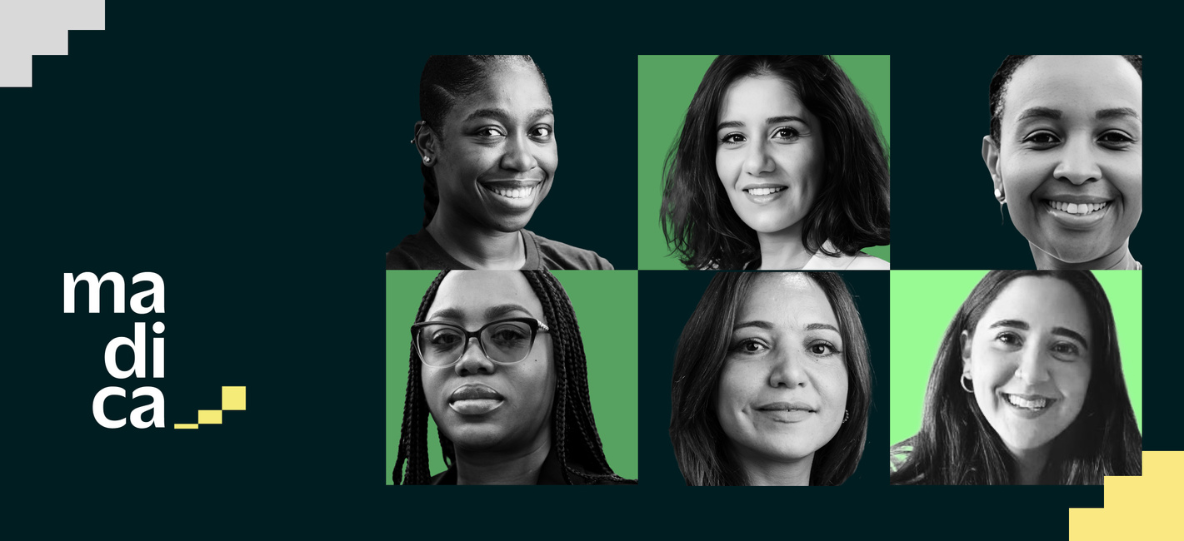
Every March, something predictable happens. Panels get announced. One off initiatives are publicised. Carousels go up. Celebration has become easier than commitment, and the ecosystem has learned to treat the former as a substitute for the latter. Some of the women being celebrated are quietly exhausted by it.
For International Women’s Month this year, we are attempting to say something more honest, drawn from the women building companies within the Madica portfolio, who were asked not to perform optimism, but to tell the truth.
The Gap Is Not About Ambition
Sub Saharan Africa has one of the highest female entrepreneurship rates in the world. Approximately 26% of entrepreneurs on the continent are women. However, only 5% of private capital-backed companies in Africa are female-founded. In a region where women are starting businesses at a rate that outpaces much of the globe, the capital flowing to them represents a rounding error.
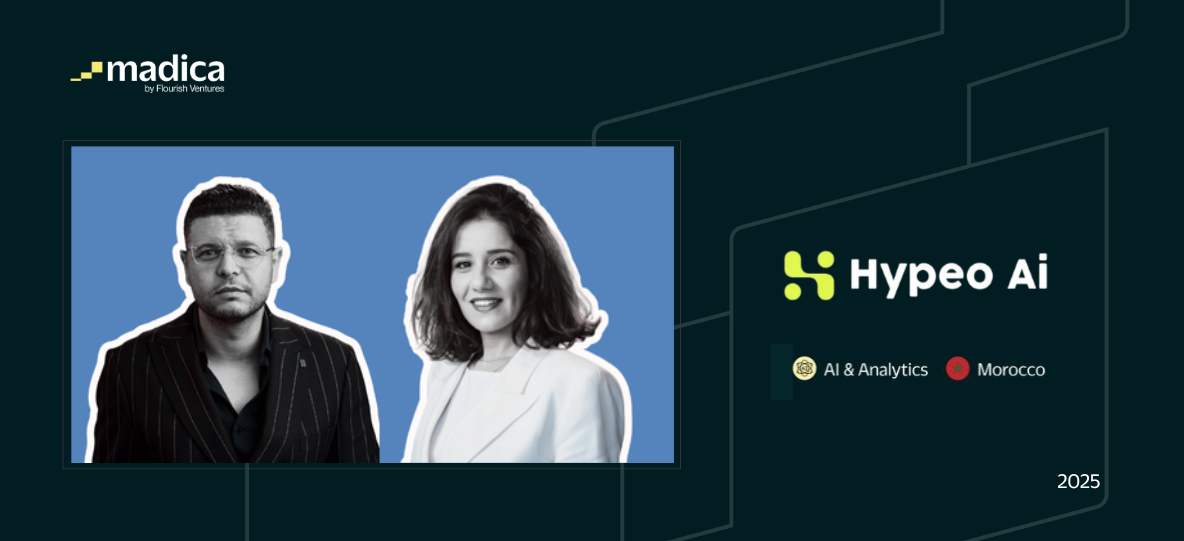
Myriam, CEO of HypeoAi thinks that this is the change in Africa’s venture ecosystem that would make the biggest difference for founders.
“The gap is not ambition or talent. It’s capital. Unlocking that would transform the entire ecosystem.”
The gap is capital. The programs, the accelerators, the panels are what the ecosystem offers when it is not yet ready to write the cheque. There is always another program. Another cohort. Another stage for a founder to stand on and share her story for an audience that will applaud, connect on LinkedIn, and return to their investment committees unchanged.
So what is keeping the cheques from being written?
The Weight That Doesn't Show Up in the Pitch Deck
Part of the answer is structural in ways the ecosystem has been slow to name clearly. Marie-Reine Seshie, Founder & CEO of Kola Market names it plainly:
"Supporting female founders has to go beyond panels and pledges. It has to show up in the term sheet, in flexible capital that doesn't assume she has a safety net, and in structures that actually account for the full weight women carry: as caregivers, as bodies in rooms that weren't built for them, as people taxed by systems men move through untouched."
This describes a cost that is real, measurable, and almost entirely invisible in the fundraising process. When a female founder walks into a pitch meeting, she is typically going to navigate a set of frictions that her male counterparts will not.
The first is how she is questioned. After an analysis of 189 pitch sessions at TechCrunch Disrupt, it was found that investors ask male entrepreneurs promotion questions about aspirations and potential gains and ask female entrepreneurs prevention questions, focused on risks and potential losses. Both male and female investors display this bias. A woman walks in with the same idea as a man. She leaves looking like she's playing defence. He leaves looking like he wants to change the world.
The second is how she is evaluated more broadly. Investment committees spend 27% more time discussing risks for female-founded companies, due diligence takes 1.7 times longer on average, and female founders are asked 2.1 times more questions about personal commitments and family plans. Research from Tech Nation suggests it reflects risk perception bias rather than actual risk differentials. The third is the network. 82% of venture deals come through warm introductions, yet female founders are 38% less likely to have direct connections to venture investors.
The safety nets that would allow her to take risk, to fail, try again, and fail better is, statistically, thinner. None of this shows up in the deck. Real support, Marie states, meets women where their lives actually are "not where the ecosystem imagines them to be." The ecosystem has a tendency to imagine female founders as a category to be supported, rather than as builders operating under specific constraints that specific interventions could address. Flexible capital structures, due diligence processes that don't penalise non-linear career paths, and respectable investment timelines should be inbuilt in investment processes and not treated as accommodations.
The Importance of What Women Build
There is another dimension to this conversation that gets crowded out by the funding statistics, and it is arguably the more important one.The female founders in the Madica portfolio are not building products for a narrow market. They are overwhelmingly building for the people that the formal economy has spent decades ignoring, and the downstream effects of that work extend far beyond the businesses themselves.
Nour of Daleela, which focuses on trusted health information and care for women, is clear about the scale of what is at stake:
"When women have access to trusted health information and care, the impact goes far beyond the individual. It shapes healthier families, stronger communities, and more resilient economies."
Wafa of Pixii Motors, building clean mobility solutions, makes the same argument through a different lens. Access to affordable, sustainable transportation is critical for communities, and for some people, it is the difference between a day’s profit or loss.
"When women and underserved communities gain access to affordable and sustainable transportation, they gain access to jobs, education, and economic independence."
And Marie, whose work with Kola Market connects neighbourhood shops across Ghana to better products, data, and partnerships, grounds the economics in the specific:
"The women running neighborhood shops across Ghana are the backbone of how goods move in this economy. When we give them access to better products, better data, and better partnerships, they don't just grow their businesses. They feed families, hire neighbors, and build the kind of local economy that everyone benefits from. That's not charity. That's just good economics."
This is the part of the argument that gets lost in the diversity conversation. When investors underfund female founders building for underserved markets, the cost is not only to those founders. It is to the communities those founders are already serving - often with limited resources, often without the capital that would allow them to move faster. The return, as Marie notes, takes longer to appear on a cap table. But "when it does, it comes in leaps and bounds."
We are not making a moral case for investing in female founders. It is clearly an economic one. The two are not in conflict, but if the economic case is what it takes to move capital, then it is worth making clear.
On the Question of Whether Support Is Actually Happening
There is a version of this piece that would answer this question with careful optimism, acknowledging progress while noting how far there is to go. That version would be accurate but still somewhat shallow.
In Myriam’s words: "The real metric isn't the number of conversations. It's the number of cheques written."
Lesley of GoBeba, who has seen enough support programs to evaluate them without sentiment, adds a different kind of clarity. Her view is that the ecosystem is not simply performing, there are some things that are working. But founders need to approach programs with clear eyes.
"The key is to figure out what you are looking for, and very quickly determine whether the program will provide it, otherwise save your time if there's no real value.", she says. The perception that it's mostly talk, she argues, often comes from a mismatch between what founders are seeking (usually capital)and what programs are actually delivering.
"So interrogate the program. See what they mean by 'support access to capital', then decide for yourself if that is what you were looking for."
This is also a useful corrective to the idea that female founders are waiting to be saved. They are not. They are evaluating their options and making decisions. The question is whether the ecosystem is offering options worth choosing.
Additionally, real support does not only flow from investors and institutions downward. Some of the most useful support in this ecosystem moves horizontally between founders who are in it, who have already negotiated that term sheet, navigated that co-investor dynamic, or figured out how to structure that raise. That knowledge exists. It is just not evenly distributed.
Chidalu, Founder of Earthbond names the gap plainly:
"Investors often have the broadest networks because they meet so many founders, but the most valuable insights come from those of us actually building companies day to day. Creating more intentional spaces for female founders to connect, share lessons, and support each other would dramatically accelerate learning across the ecosystem."
Peer knowledge can be one of the most practical forms of support that exist, but this remains inaccessible to too many of the people who need it most. Making this support available consistently, not as a one-off workshop or a monthly coffee chat that dissolves after the program ends, is what separates intention from infrastructure. The ecosystem has plenty of moments. What it lacks are structures that keep female founders in the same room long after the event is over. That is what needs building, and it is what female founders, given the sustained space to do it, are more than capable of building for each other.
What This Month Is Actually For
International Women's Month will produce a lot of content. Some of it will be moving. Most of it will be forgotten by April.
The founders in this piece are not asking to be celebrated. They are asking to be funded, at scale, early, and with the same expectations of building category-defining companies that their male counterparts receive as a default. They are asking for capital structures that reflect their actual lives. They are asking for peer networks that are built with the same intentionality as investor networks. And they are asking for the ecosystem to measure its support not in conversations but in outcomes.
This piece was written drawing on perspectives from female founders across the Madica portfolio: Nour (Daleela), Chidalu (Earthbond), Wafa Dhifi (Pixii Motors), Myriam (HypeoAi), Lesley (GoBeba), and Marie (Kola Market).


.jpg)


